Sep 3, 2026
What to Check Before Ordering a Hydraulic Dock Leveler | GEAJIE
Before ordering a hydraulic dock leveler, check dock height, pit size, truck range, forklift load, power standard, lip design and factory inspection details.
A hydraulic dock leveler plays an important role in daily warehouse loading and unloading. It bridges the height difference between the loading dock floor and the truck bed, helping forklifts move goods more smoothly between the warehouse and the vehicle.
But a dock leveler should not be ordered only by model name or platform size. Different loading bays often have different site conditions, truck types, forklift weights and working frequencies. These details can directly affect the platform length, lip structure, rated capacity, hydraulic system and installation method.
That is why project review is important before production.
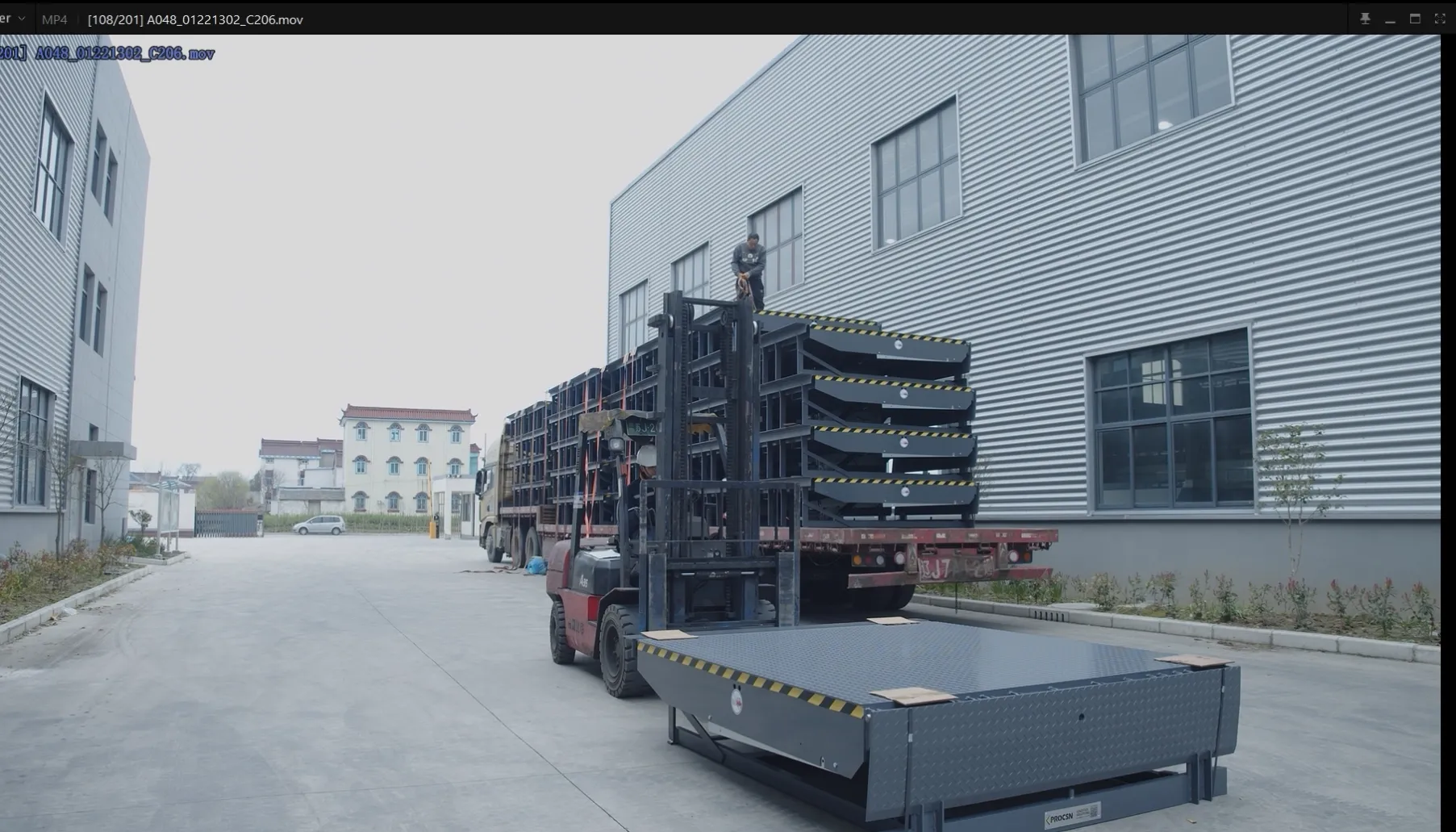
In this GEAJIE factory video, you can see hydraulic dock levelers during production testing and inspection. The video shows finished units, lifting movement, lip area, anti-slip deck plate, safety marking and workshop handling. These visible details help buyers understand how the equipment is checked before delivery and how it will support real loading dock operation.
Before ordering a hydraulic dock leveler, the first detail to confirm is the dock height. The dock leveler must match the height difference between the warehouse floor and the truck bed. If the height range is not suitable, forklift movement may become difficult or unsafe during loading.
The second detail is the pit size. For a pit-mounted dock leveler, the pit length, width and depth should be checked carefully before production. If the civil work and equipment size do not match, installation may be delayed or require extra modification at site.
Load capacity is also important. Buyers should consider not only the weight of goods, but also the forklift type, axle load and daily working frequency. A loading dock used many times every day may need stronger structure and more careful configuration than a low-frequency loading area.
The lip design should also match the truck and loading operation. The lip is the part that rests on the truck bed and creates the bridge for forklift transfer. Lip length, lip movement and safety marking should be reviewed according to the truck type and operating environment.
The hydraulic system and power standard should be confirmed before production as well. Different countries and projects may use different voltage and power requirements. Confirming this early helps avoid problems during installation and commissioning.
For warehouses, factories, logistics centers and distribution facilities, factory inspection before delivery can help reduce later installation problems. Checking lifting movement, platform structure, welding condition, deck plate, safety parts and finished appearance gives buyers more confidence before shipment.
GEAJIE provides hydraulic dock levelers, telescopic lip dock levelers, dock ramps, dock shelters, dock seals and related loading dock equipment for warehouse and industrial projects. Each project should be reviewed according to the real site condition, not only by standard product size.
If you are planning a loading bay project, send GEAJIE your dock height, pit size, truck type, forklift load and daily operating requirements. We can help review a suitable hydraulic dock leveler configuration before production.