
Jun 26, 2026
Dock Lock + Traffic Light System: How One Upgrade Helped Veteran Distributors Handle More Orders Safely
The Day I Visited Old Li’s Warehouse and Saw How “Safety” Actually Helped Him Land More Big Orders A few days ago, I drove out to the suburban logistics warehouse I’ve worked with for three years. Old
The Day I Visited Old Li’s Warehouse and Saw How “Safety” Actually Helped Him Land More Big Orders
A few days ago, I drove out to the suburban logistics warehouse I’ve worked with for three years. Old Li is a classic veteran distributor—mid-fifties, with over a dozen older manual dock levelers and vehicle restraints still in daily use. The moment he saw me, he sighed, “Young Zhang, freight trucks are everywhere these days, and drivers are always in a hurry. We’ve been lucky so far, but every loading and unloading operation keeps me on edge. One small mistake could ruin our reputation.”
I nodded and followed him around the loading area without rushing into a sales pitch. The problems were obvious: drivers would park and decide for themselves if the truck was “secure enough.” Operators inside had to shout or call to let drivers know when the restraint was locked. Sometimes impatient drivers would start the engine before the restraint was fully released, nearly damaging the equipment. At night or in rainy weather, poor visibility made communication even worse—everything relied on yelling, which slowed things down and left safety risks hanging in the air.
I asked Old Li, “What if there was a system that automatically links the traffic lights, vehicle restraint, and dock leveler? Both drivers and operators would simply follow the lights—no more shouting. Would that make a difference?”
His eyes lit up, but he was still skeptical. “Sounds good, but can it work with my old equipment? Will it be complicated?”
I smiled and said, “Come on, let me show you the upgrade we just did for Old Wang’s warehouse next door.”
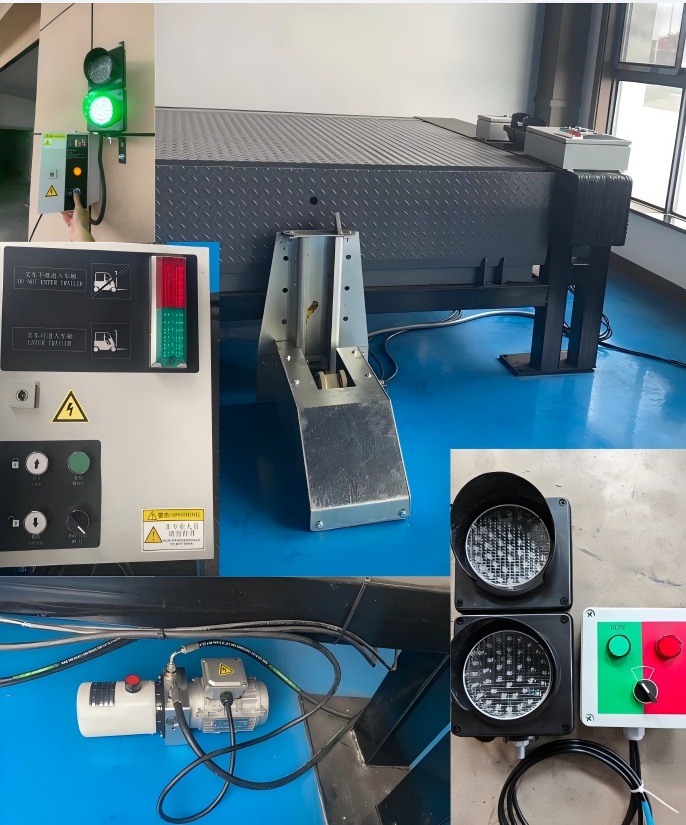
The next day, my technician and I went to Old Li’s site for the retrofit. The whole process turned out to be surprisingly straightforward. We added sensors and an electromagnetic lock to his existing vehicle restraint (Dock Lock), integrated a signal linkage module into the dock leveler control panel, and installed bright LED traffic lights both inside and outside the warehouse, plus a simple operation button.
Now the system works like a set of traffic lights directing traffic at an intersection:
- Green light outside → Driver knows it’s safe to approach and dock.
- Red light inside → Operator knows the vehicle is securely locked and can work confidently.
- After loading/unloading, operator presses the release button → Restraint unlocks automatically, outside light turns from red to green, inside light turns green → Driver double-checks and drives away safely.
The best part? It barely changed Old Li’s original workflow. We simply replaced “shouting to communicate” with “watching the lights.” The added sensors and flashing function also made everything crystal clear even at night.
Right after the upgrade, Old Li couldn’t wait to test it with several trucks. The results surprised both of us: loading and unloading a 40-foot container, which used to take 12–15 minutes on average, now consistently finished in 8–9 minutes. Drivers and operators no longer had to raise their voices, and miscommunication dropped dramatically. At night, the bright flashing lights were visible from a distance, giving everyone real peace of mind.
A week later, Old Li called me, his voice full of excitement: “Young Zhang, this system really works! Last week we took on two new nighttime e-commerce delivery contracts we used to turn down. Drivers say they feel much safer and aren’t rushed anymore. Equipment damage has also decreased noticeably, which means lower repair costs.”
I laughed and replied, “Old Li, this isn’t about selling you new hardware. It’s about upgrading your existing equipment into a smart safety command system. It lets your warehouse handle more orders, run faster, and take on less risk—basically helping you grow your business and make more money.”
Old Li burst out laughing: “You’re right! Now when I talk to other customers, I tell them this is our warehouse’s ‘upgraded safety guarantee.’ They’re interested too. I’ll introduce a few more peers to you soon.”
In Summary
This visit reminded me once again: a good product isn’t just hardware—it truly solves pain points for distributors and end warehouses, creating real value. When safety and efficiency improve together, business naturally grows.
If you’re a logistics equipment distributor and you’re worried about safety risks or efficiency bottlenecks with your long-term clients, drop a comment below:
What’s the most common communication problem during loading/unloading in your warehouse?
Or, after an upgrade, which area would you most want to improve—safety, efficiency, or ability to take on more orders?
I’d love to hear your thoughts. Let’s work together to turn good equipment into a real money-making opportunity for our old customers!